Humidity, Moisture & Indoor Air Quality | DezAir - Copy
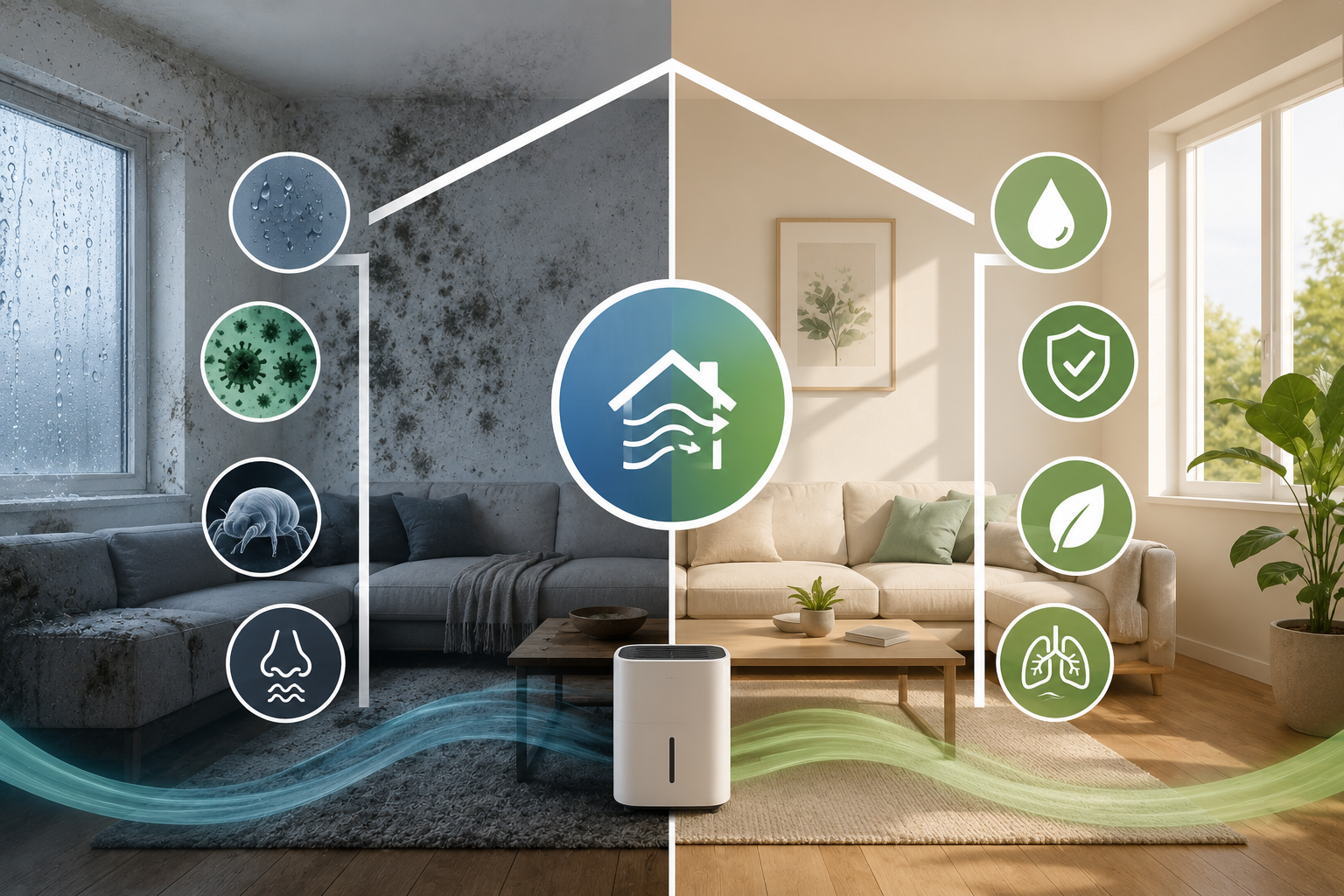
How Humidity and Moisture Control Affect Indoor Air Quality
Humidity plays a bigger role in indoor air quality than most people think about day to day. Indoor relative humidity that runs consistently high — generally above about 60%, though this varies somewhat by source and season — creates conditions where mold, dust mites, and other air quality concerns are more likely to develop and persist.
Where Moisture Problems Are Most Likely to Occur
This matters most in areas of a home where moisture naturally accumulates and doesn't dry out quickly: basements, crawl spaces, bathrooms without adequate ventilation, and areas around plumbing.
Persistent dampness in these spaces, even without an active leak, can be enough to support mold growth over time.
Common Signs of a Humidity or Moisture Issue
A few practical signs of a humidity or moisture issue include:
Condensation on windows
A persistent musty smell
Visible dampness on walls or flooring
A general "heavy" feeling to the air in certain rooms
None of these alone confirm a mold problem, but they do indicate conditions where one is more likely to develop, and are worth addressing on their own even if mold testing comes back clear.
Practical Ways to Control Moisture
Practical moisture control generally includes adequate ventilation (especially in bathrooms and kitchens), addressing any known leaks promptly, and using dehumidification in consistently damp areas like basements.
None of this is a substitute for testing if you have a specific concern, but it does reduce the conditions that make mold issues more likely to develop in the first place.
Schedule a radon or mold test today with DezAir Quality Testing online at dezairqualitytesting.com.
