Where Does Mold Typically Grow in a Home? | DezAir
Where Does Mold Typically Grow in a Home?
Mold needs moisture and a food source (most building materials qualify) to grow, which is why it tends to concentrate in specific, predictable areas of a home — generally the same areas where dampness lingers longest.
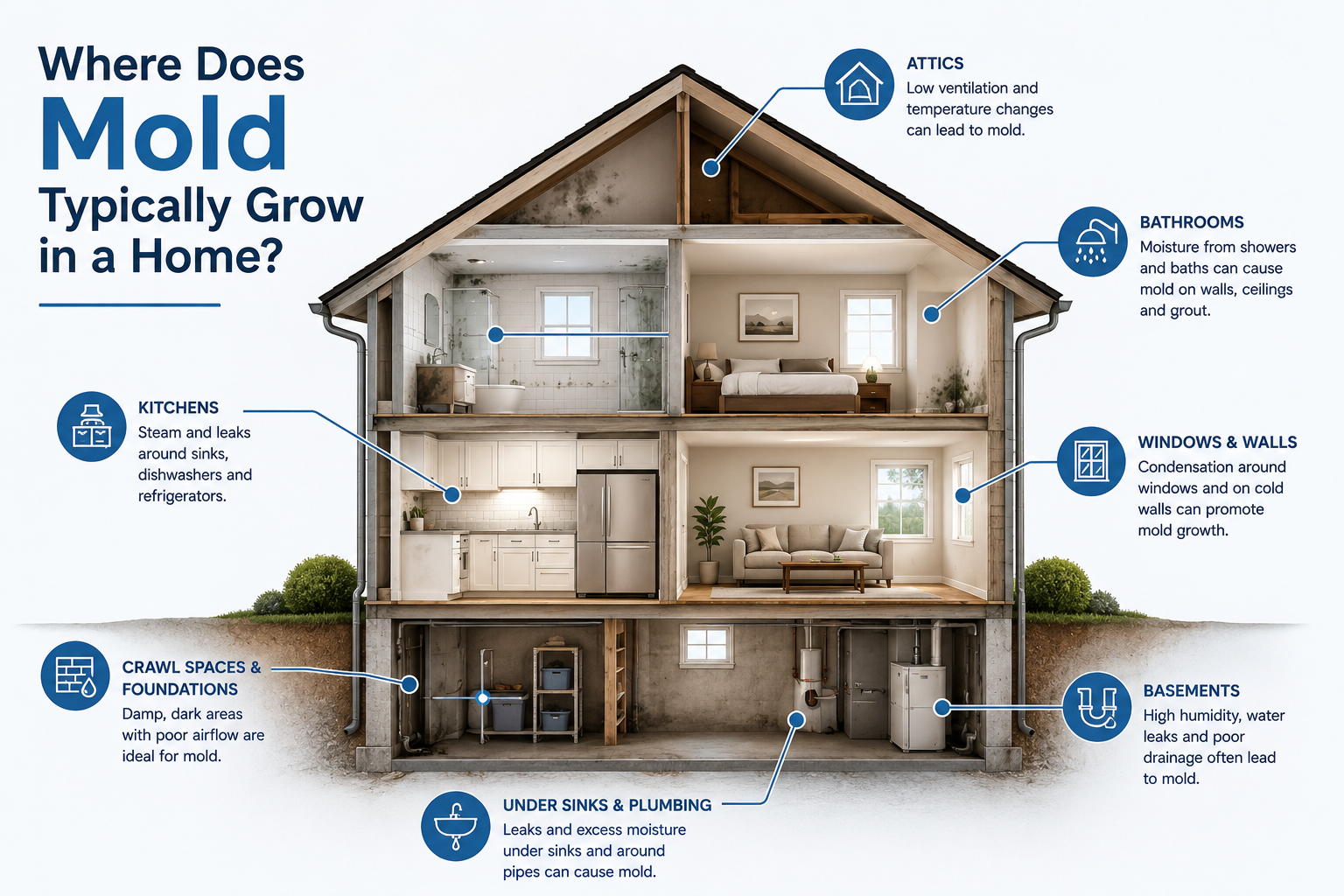
Basements and Crawl Spaces
Basements and crawl spaces are among the most common locations, since they're naturally prone to higher humidity, less airflow, and sometimes direct contact with ground moisture.
Bathrooms and Plumbing Areas
Bathrooms without adequate ventilation are another common spot, particularly around tile grout, behind toilets, and under sinks where slow leaks can go unnoticed.
Areas around plumbing generally — under kitchen sinks, around water heaters, near washing machine connections — are worth attention for the same reason.
Attics and HVAC Systems
Attics can also develop mold, often related to roof leaks, inadequate ventilation, or ice dam issues during winter that aren't immediately obvious from inside the living space.
HVAC systems themselves, particularly ductwork and around condensate lines, are a less commonly considered but genuinely relevant location, since they combine moisture (from condensation) with limited visibility.
Why Mold Can Go Unnoticed
A common thread across all of these locations: they're generally not spaces people inspect regularly, which is part of why mold can develop and persist for a while before being noticed, if it's noticed at all through a smell or visible sign.
Schedule a radon or mold test today with DezAir Quality Testing online at dezairqualitytesting.com.
